

Master Brand Appraisal: A Step-by-Step Guide for Tech CEOs
- Sherwood Australia

- Jun 2
- 8 min read
Updated: 2 days ago
Introduction
In an era where technological advancements redefine market dynamics, the ability to accurately assess a brand's value is crucial for sustained success. A thorough brand appraisal not only provides insights into market positioning and consumer perception but also reveals opportunities for growth and strategic partnerships that can elevate a company's valuation.
Technology CEOs often struggle to quantify their brand's value amidst rapid innovation and competition. Understanding how to measure this worth effectively can lead to maximum impact. Identifying the right metrics and strategies can empower CEOs to transform brand insights into significant growth opportunities.
Define Brand Appraisal and Its Importance for Tech Companies
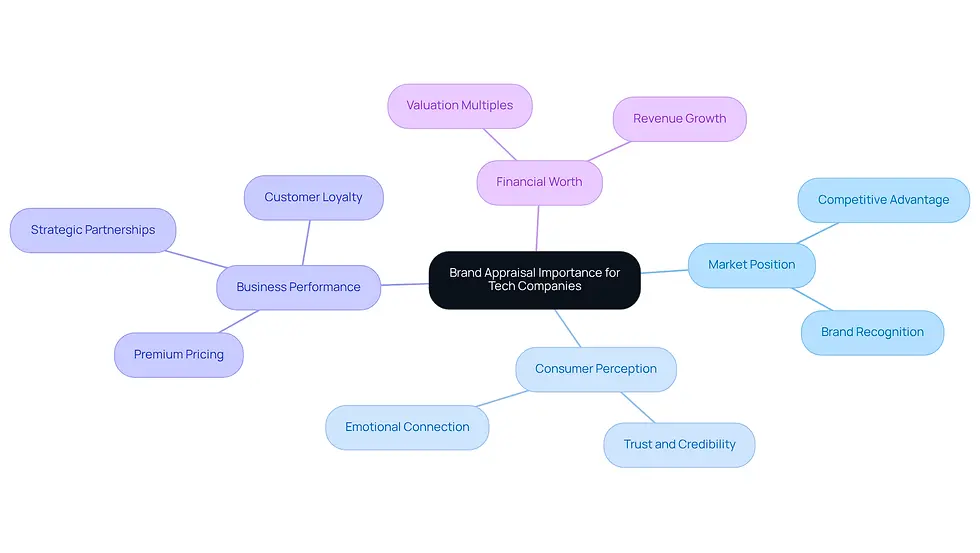
In an increasingly competitive technology landscape, conducting a brand appraisal is essential for maximizing a product's financial worth. This systematic evaluation encompasses a product's market position, consumer perception, and overall influence on business performance. A strong identity can lead to premium pricing, attract strategic partnerships, and build customer loyalty, significantly enhancing a company's valuation.
For instance, portfolios of high-equity labels have consistently surpassed major market indices, such as the S&P 500, by 88% over two decades, which underscores the financial benefits of maintaining robust equity. Furthermore, as company reputation is expected to represent 30-40% of enterprise value by 2026, technology CEOs must prioritize brand appraisal to make informed choices that enhance their equity and promote sustainable growth.
Current trends indicate that brands that effectively leverage their reputation are seeing higher multiples in valuations, highlighting the growing significance of brand appraisal in the competitive technology landscape.
Sherwood Australia’s independent valuation services are particularly crucial for technology CEOs navigating negotiations, legal proceedings, and capital raising. With more than 250 assessments provided across various sectors, Sherwood employs a customized approach that adjusts globally acknowledged methods to address the distinct requirements of AI enterprises and other technology businesses.
By prioritizing brand strength, technology executives can unlock new avenues for growth and enhance their market position.
Identify Key Metrics for Evaluating Brand Value
To navigate the complexities of brand valuation, tech CEOs must prioritize specific metrics that reveal their brand's true worth:
Brand Value: This assesses the worth contributed to a product by possessing a recognized name. It can be evaluated through client surveys and market analysis.
Customer Loyalty: Metrics such as Net Promoter Score (NPS) and customer retention rates provide insights into how loyal customers are to the company.
Market Share: Understanding the percentage of the market that the brand occupies helps gauge its competitive position.
Brand Recognition: This can be evaluated through surveys that assess how familiar consumers are with the brand.
Financial Performance: Examining revenue growth and profitability associated with marketing initiatives can offer a clear view of value.
By concentrating on these metrics, technology CEOs can truly grasp their company's performance and its broader implications for business success.

Gather Data and Conduct Market Research
To effectively gather data, tech CEOs must adopt a structured approach that aligns with their strategic objectives:
Define research objectives: Clearly outline what you want to achieve with your brand appraisal. This could involve understanding client perceptions or assessing competitive positioning. Setting clear objectives is essential, as it directs the research process and ensures that the information gathered aligns with business goals.
Select Research Methods: Utilize a mix of qualitative and quantitative research methods. Surveys, focus groups, and interviews can provide valuable insights into customer attitudes and behaviors. In 2026, AI integration in survey design will enable real-time adaptations, enriching the data collected.
Analyze Competitor Labels: Conduct a competitive analysis to understand how similar labels are perceived in the market. This can assist in recognizing gaps and opportunities for your business. Tools like SEMrush and SimilarWeb can provide insights into competitors' traffic sources and content performance, aiding in strategic positioning.
Leverage Digital Tools: Utilize online tools and platforms to collect information on brand mentions, social media engagement, and customer feedback. Tools like Google Analytics and social listening platforms can provide real-time insights into consumer sentiment and preferences, which empower informed decision-making. Additionally, for tech companies, especially those in AI, engaging with a specialist like Sherwood Australia can ensure that the valuation of proprietary models, datasets, and algorithms is both compliant and tailored to the complexities of the market. Sherwood Australia, with its AFSL license, offers investment-grade valuations that are trusted by founders, investors, and boards across Australia and internationally, with a typical report turnaround of 14 days.
Compile and Organize Information: Once information is gathered, arrange it systematically to aid analysis. This could involve creating spreadsheets or utilizing visualization tools like Tableau and Microsoft Power BI to highlight key findings. Efficient information organization improves the capacity to obtain actionable insights and aids strategic planning.
By following these steps, tech executives can ensure they have a solid information base for their brand appraisal evaluations, leading to better strategic choices. As the landscape evolves, those who harness these insights will not only survive but thrive in the competitive arena.

Analyze Data to Assess Brand Strengths and Weaknesses
Tech CEOs must rigorously analyze gathered data to uncover their brand's strengths and weaknesses:
SWOT Analysis: Conduct a SWOT analysis (Strengths, Weaknesses, Opportunities, Threats) to evaluate internal and external factors impacting the organization. This structured approach identifies key improvement areas, enabling leaders to align strategies with market demands.
Client Feedback Analysis: A significant 89% of shoppers are swayed by negative reviews, underscoring the need to grasp buyer sentiments. Review client feedback and survey results to pinpoint common themes regarding brand perception. As Michael Podolsky, Cofounder and CEO of PissedConsumer, states, "Client feedback analysis is the process of collecting, organizing, and interpreting input from your clients to inform decisions that enhance your products, support, marketing, and overall experience." Look for patterns in customer satisfaction and areas where the company excels or falls short, as customers who feel their feedback matters are 70% more likely to remain loyal.
Market Positioning Review: Assess how the product is positioned relative to competitors. Identify unique selling propositions (USPs) that set the company apart in the market. This analysis can uncover opportunities for growth and areas where the company can enhance its competitive edge.
Financial Performance Metrics: Analyze financial data associated with initiatives, such as revenue growth attributed to marketing campaigns or product launches. This highlights how product strength impacts finances, showing how consumer perceptions translate into real business outcomes. For instance, McDonald York's systematic feedback collection led to a 15% increase in gross profit margin, demonstrating the benefits of effective customer feedback analysis.
Visualize Information: Utilize visualization tools to create charts and graphs that depict performance metrics of the company. This can make it easier to communicate findings to stakeholders, ensuring that insights are accessible and actionable.
By thoroughly examining the information, technology executives can cultivate a clear perception of their brand's strengths and weaknesses through a brand appraisal, guiding future strategic choices and improving overall brand performance.

Present Findings and Develop Strategic Recommendations
Tech CEOs face the critical task of translating data analysis into actionable strategies that drive organizational success:
Create a Comprehensive Report: Compile all findings into a structured report that outlines key insights, supporting data, and visualizations. This report should be clear and concise, making it easy for stakeholders to understand the implications of the analysis.
Highlight Key Insights: Focus on the most critical insights derived from the analysis, such as strengths that can be leveraged and weaknesses that need addressing. Involving stakeholders in this process can cultivate a sense of ownership and alignment with the organization's direction, as 70% of respondents in the Brandemia study believe user experience is the most vital factor when assessing a company’s credibility.
Develop Actionable Strategies: Based on the findings, propose specific strategies to enhance product value. This may involve focused marketing efforts, new product innovations, or improved customer engagement strategies that align with audience values. Significantly, 73% of marketers intend to boost investments in branding in 2026, highlighting the necessity of aligning strategies with market expectations.
Set Measurable Goals: Establish clear, measurable objectives for the company moving forward. This could involve increasing product awareness by a specific percentage or enhancing customer satisfaction scores, ensuring that progress can be tracked and assessed.
Engage Stakeholders: Present the findings and recommendations to key stakeholders, ensuring that there is buy-in for the proposed strategies. Employ visuals and data to strengthen your argument and promote discussion, because effective stakeholder engagement is crucial for successful strategy implementation. Expert opinions, such as those from Nathalie Nahai, emphasize the importance of combining experimentation with responsibility in AI deployment, which can further enhance stakeholder confidence.
Ultimately, the ability to translate insights into strategic actions will determine the organization's competitive edge in a rapidly evolving market.

Conclusion
In a competitive landscape, many CEOs struggle to identify effective strategies for enhancing financial worth. Conducting a brand appraisal emerges as a critical strategy for CEOs seeking to enhance their company's financial worth and market presence. This evaluation assesses market position and consumer perception, playing a crucial role in business performance. By prioritizing brand strength, technology executives can unlock new growth opportunities, ensuring their companies remain not just relevant, but thriving in a dynamic environment.
The article outlines essential steps for effective brand appraisal, starting with defining key metrics such as brand value, customer loyalty, and market share. It emphasizes the necessity of gathering comprehensive data through structured market research and employing various analytical methods, including SWOT analysis and client feedback reviews. By understanding their brand's strengths and weaknesses, tech CEOs can make informed decisions that drive strategic initiatives and enhance overall performance.
Ultimately, the significance of brand appraisal in the tech industry cannot be overstated. As the landscape continues to evolve, embracing a robust brand evaluation process will empower technology companies to navigate challenges, capitalize on opportunities, and foster lasting customer loyalty. By adopting a rigorous brand appraisal process, technology companies can not only adapt to change but also secure their future in a competitive marketplace.
Frequently Asked Questions
What is brand appraisal and why is it important for tech companies?
Brand appraisal is a systematic evaluation of a product's market position, consumer perception, and overall influence on business performance. It is important for tech companies as it maximizes a product's financial worth, leads to premium pricing, attracts strategic partnerships, and builds customer loyalty, significantly enhancing a company's valuation.
How does brand appraisal impact a tech company's financial performance?
A strong brand identity can lead to financial benefits such as higher pricing, increased customer loyalty, and the ability to attract strategic partnerships. Companies with high-equity brands have consistently outperformed major market indices, indicating that robust brand equity can significantly enhance a company's valuation.
What percentage of enterprise value is expected to be represented by company reputation by 2026?
Company reputation is expected to represent 30-40% of enterprise value by 2026, making brand appraisal a priority for technology CEOs to enhance equity and promote sustainable growth.
What are the key metrics for evaluating brand value in tech companies?
Key metrics include: Brand Value: Worth contributed by a recognized name, evaluated through client surveys and market analysis. Customer Loyalty: Measured by metrics like Net Promoter Score (NPS) and customer retention rates. Market Share: Percentage of the market occupied by the brand. Brand Recognition: Assessed through surveys measuring consumer familiarity with the brand. Financial Performance: Revenue growth and profitability linked to marketing initiatives.
How can Sherwood Australia assist tech CEOs with brand valuation?
Sherwood Australia provides independent valuation services tailored for technology CEOs, helping them navigate negotiations, legal proceedings, and capital raising. They have conducted over 250 assessments across various sectors, using a customized approach to meet the unique needs of AI enterprises and other tech businesses.
What trends are currently influencing brand appraisal in the technology sector?
Current trends indicate that brands leveraging their reputation effectively are seeing higher multiples in valuations, highlighting the growing importance of brand appraisal in the competitive technology landscape.


