
Master Independent Copyright Valuation in 5 Simple Steps
- Sherwood Australia

- 4 hours ago
- 8 min read
Introduction
Many business owners struggle to grasp the complexities of copyright valuation, which can lead to misinformed decisions. Understanding the nuances of copyright valuation helps business owners leverage their intellectual property and comply with legal standards in Australia. Navigating this complex landscape requires a clear understanding of the methods and criteria involved in copyright valuation. This guide presents five essential steps for mastering independent copyright valuation, enabling readers to make informed decisions and maximize their creative assets' potential.
Understand Copyright Valuation Basics
Determining the monetary worth of copyrighted works through independent copyright valuation is a complex process that requires a nuanced understanding of intellectual property rights. Grasping the fundamentals entails acknowledging that intellectual property safeguards the expression of concepts rather than the concepts themselves. Key concepts include:
Copyright Ownership: The creator of a work typically holds the copyright, granting them exclusive rights to use and distribute the work. This ownership is essential, as it directly affects the marketability of the property and potential revenue generation.
Duration of Copyright: Copyright protection endures for the life of the creator plus an additional 70 years in many jurisdictions, significantly influencing the value of the property over time. Longer protection can enhance the potential for income through licensing and royalties, especially in light of recent trends such as the Disney-OpenAI agreement, which indicates a shift towards formal licensing of copyrighted material for generative AI use.
Economic Value: The economic value of intellectual property is significantly influenced by its ability to generate income through various channels, including sales, licensing, and royalties, as evidenced by numerous successful case studies in the industry. For example, a well-established intellectual property can provide a consistent revenue source, making it a valuable resource for enterprises. Furthermore, the emerging idea of 'Output Liability' complicates the assessment process, as it raises questions about accountability for AI-generated content that resembles copyrighted material.
At Sherwood Australia, we understand that assessing copyright differs from traditional enterprise evaluations. Our expert IP assessment services utilize a multi-methodology approach, including market, income, cost, and relief-from-royalty methods, ensuring that every assumption is stated, explained, and defensible. Involving IP specialists, like accountants, is advisable for precise assessment of IP resources, ensuring that companies acknowledge the complete worth of their creative works. With our AFSL Licence No. 563351, we are dedicated to delivering legally compliant and professionally indemnified assessments, customized to fulfill the requirements of our clients in the Australian mid-market context, usually involving deal sizes ranging from A$5 million to A$350 million. Recognizing the full value of creative works is essential for companies aiming to leverage their intellectual property effectively in a competitive market.

Identify Valuation Methods and Criteria
Valuing copyrights requires a nuanced understanding of various methods tailored to specific circumstances and asset types:
Income Approach: This method estimates value based on the anticipated future income generated by the copyright. It is particularly effective for works with identifiable revenue streams, such as music or software. Accurate valuation using this approach is crucial for compliance with financial reporting standards, as it helps businesses present a true representation of their financial health.
Market Approach: This method evaluates the value of the intellectual property by comparing it to similar works that have been sold or licensed. It provides a market-based perspective, relying on access to reliable market data. The effectiveness of this method is enhanced when a strong market exists for similar resources, enabling informed decision-making in mergers and acquisitions.
Cost Approach: This method calculates value based on the costs incurred in creating the work, including production and development expenses. It is often employed when market data is limited, making it a practical choice for early-stage technologies or unique creations.
Understanding these assessment techniques helps business owners select the best method for an independent copyright valuation of their intellectual property assets. As intellectual property law evolves, particularly with discussions around AI and rights, being informed about these methodologies can improve strategic planning and compliance.

Collect Relevant Documentation and Data
Inadequate documentation can severely undermine the accuracy of copyright valuation, leading to significant financial repercussions for business owners. To execute a successful copyright valuation, it is essential to gather comprehensive documentation and data that substantiate the valuation process:
Copyright Registration: Proof of registration not only enhances the credibility of the valuation but also establishes ownership, which is crucial for legal protection. Registration creates a public record of ownership, recognized in court, and allows the owner to seek statutory damages for infringement.
Financial Statements: Historical financial data related to the copyright, including revenue generated from sales or licensing, is vital for the income approach. Precise financial statements can greatly influence the assessment, as they offer insights into the economic performance of the copyrighted work.
Market Comparables: Data on similar copyrighted works, including sales prices and licensing agreements, supports the market approach. This comparative analysis helps in determining a fair market value based on existing transactions in the industry.
Production Costs: Documentation of the costs incurred in creating the work, including development and marketing expenses, is essential for the cost approach. Understanding these costs aids in assessing the investment made in the intellectual property.
Without comprehensive documentation, business owners risk undervaluing their intellectual property, leading to potential financial losses. Gathering this information not only strengthens the valuation but also positions business owners for more favorable negotiations and legal outcomes. Ultimately, neglecting to gather essential documentation can jeopardize not only the valuation process but also the financial future of the business.

Execute the Valuation Process
Valuing copyright through independent copyright valuation can be a complex endeavor, yet it is crucial for making informed strategic decisions about intellectual property assets. To execute the copyright valuation process effectively, follow these steps:
Select the Assessment Method: Choose the most appropriate assessment approach based on the nature of the intellectual property and the data gathered. Common methods include the income approach, which estimates future income; the market approach, which compares similar assets; and the cost approach, which evaluates the expense of developing or replacing the intellectual property.
Analyze the Data: Review all collected documentation and data for accuracy and relevance. This may involve conducting financial analyses, market research, or cost assessments to ensure that the estimation is based on reliable information.
Calculate the Value: Apply the chosen assessment method to determine the copyright's worth. For instance, when using the income approach, project future income streams and discount them to their present value to arrive at a reliable estimate.
Document the Process: Maintain detailed records of the assessment process, including all calculations, assumptions made, and sources of data. This documentation is essential for ensuring transparency and credibility in the assessment.
Review and Revise: After completing the assessment, review the results critically and consider making adjustments based on current market conditions or any new insights that may arise.
Ultimately, an independent copyright valuation process not only clarifies the worth of assets but also enhances strategic opportunities for owners.

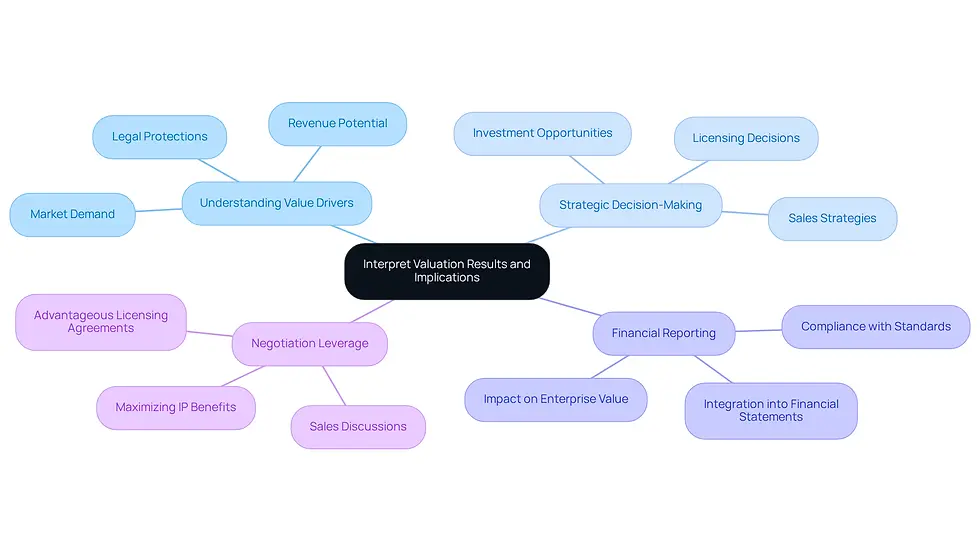
Interpret Valuation Results and Implications
Once the copyright valuation is complete, the next step is to interpret the results effectively to drive strategic business decisions:
Understanding Value Drivers: Identify the key factors that contributed to the valuation, such as market demand, revenue potential, and legal protections. For instance, a recent report highlighted that UK firms invested £245 billion in intangible resources in 2023, underscoring the importance of understanding these factors to guide future strategies. We understand that the value of a patent portfolio or proprietary platform hinges on how well it is legally protected and the options it offers for commercialization.
Strategic Decision-Making: Utilize the assessment results to inform choices related to licensing, sales, or additional investment in the copyright property. A high assessment may warrant increased marketing efforts or expansion into new markets, as firms demonstrating a clear evaluation of their IP assets are more likely to secure funding from investors. Our AFSL-licensed approach ensures that these assessments comply with ASIC requirements, providing a solid foundation for strategic decisions.
Financial Reporting: Integrate the assessment into financial statements or reports, as it can greatly influence the overall worth of the enterprise. Accurate IP assessment is essential for compliance with financial reporting standards, which require businesses to report the value of their intangible assets. Sherwood Australia’s investment-grade assessment reports are designed to meet these standards, ensuring credibility in financial disclosures.
Negotiation Leverage: Utilize the assessment as a negotiation tool in licensing agreements or sales discussions. For example, companies that perform comprehensive IP assessments are better equipped to negotiate advantageous licensing agreements, boosting their revenue potential. By leveraging our expertise, clients can maximize the benefits of their intellectual property in negotiations.
By effectively interpreting the valuation results, business owners can maximize the benefits of their intellectual property and make informed strategic decisions that align with their growth objectives. This informed approach not only enhances the value of intellectual property but also positions businesses for sustainable growth in competitive markets.
Conclusion
Navigating the complexities of copyright valuation is crucial for business owners aiming to leverage their intellectual property effectively. Understanding the intricacies of copyright valuation - like ownership rights, duration, and economic value - helps businesses navigate this complex process more effectively. The insights provided in this guide emphasize the importance of a structured approach to valuation, ensuring that every aspect is considered to maximize the potential of creative works.
Key steps in the copyright valuation process include:
Identifying appropriate valuation methods
Collecting relevant documentation
Executing the valuation
Interpreting the results
Each of these steps plays a critical role in establishing a credible and defensible valuation that aligns with ASIC requirements and Sherwood Australia's commitment to legal compliance. By utilizing methods such as the income, market, and cost approaches, business owners can make informed decisions that reflect the true worth of their intellectual property.
Ultimately, mastering copyright valuation clarifies asset value and empowers business owners to make strategic decisions that drive growth and innovation. Prioritizing thorough documentation and leveraging expert insights enhances companies' negotiation power, leading to favorable outcomes in licensing and sales. Embracing these best practices will position businesses to thrive in a competitive landscape, ensuring that their intellectual property is recognized as a vital asset in their overall strategy.
Frequently Asked Questions
What is copyright valuation?
Copyright valuation is the process of determining the monetary worth of copyrighted works, which requires an understanding of intellectual property rights and the nuances involved in assessing the value of creative works.
Who typically holds copyright ownership?
The creator of a work usually holds the copyright, granting them exclusive rights to use and distribute the work, which directly impacts its marketability and potential revenue generation.
How long does copyright protection last?
Copyright protection generally lasts for the life of the creator plus an additional 70 years in many jurisdictions, which can significantly influence the value of the property over time.
What factors influence the economic value of intellectual property?
The economic value is influenced by its ability to generate income through sales, licensing, and royalties. Established intellectual property can provide a consistent revenue source, making it a valuable asset for businesses.
What is the 'Output Liability' concept?
'Output Liability' refers to the accountability for AI-generated content that resembles copyrighted material, complicating the assessment of copyright value.
What valuation methods are used for copyrights?
The main valuation methods include: - Income Approach: Estimates value based on anticipated future income from the copyright. - Market Approach: Evaluates value by comparing it to similar works that have been sold or licensed. - Cost Approach: Calculates value based on the costs incurred in creating the work.
Why is it important to involve IP specialists in copyright valuation?
Involving IP specialists, such as accountants, ensures a precise assessment of intellectual property resources, helping companies recognize the full worth of their creative works.
What is the significance of understanding valuation methods for business owners?
Understanding these methods helps business owners select the best approach for independent copyright valuation, improving strategic planning and compliance as intellectual property law evolves.


