

Master Expert IP Valuation: Best Practices for Tech CEOs
- ANTHONY VAGO
- May 13
- 8 min read

Updated: May 15
Introduction
In the fast-evolving technology sector, the effective valuation of intellectual property (IP) is critical for sustaining innovation and achieving strategic goals. For tech CEOs, mastering the nuances of IP valuation is essential for attracting investment, guiding mergers and acquisitions, and making informed business decisions. Many tech CEOs struggle with the intricacies of IP valuation, often leading to missteps that can jeopardize their strategic goals. Tech executives must adopt precise valuation strategies to accurately assess their intellectual assets, thereby maximizing their company's potential and securing a competitive edge.
Understand the Importance of IP Valuation
In the tech sector, intellectual property (IP) is not just an asset; it is a critical driver of competitive advantage and strategic decision-making. For tech CEOs, understanding the importance of IP assessment is crucial, as it directly influences strategic decisions related to funding, mergers, acquisitions, and partnerships. Understanding the accurate valuation of IP provides several key advantages for tech companies:
Attracting Investment: Companies that can effectively demonstrate the value of their IP are more likely to secure funding. Investors view strong IP as a signal of potential future revenue, significantly enhancing a company's attractiveness during fundraising efforts. Startups with robust IP portfolios are perceived as more mature and capable of long-term success, making them ten times more successful in securing seed-stage funding compared to those without. With Sherwood Australia's expert IP valuation, you can ensure your intellectual property is accurately assessed, which can enhance its market value and make your company more appealing to investors.
Strategic Planning: Recognizing the importance of IP enables companies to allocate resources more effectively, concentrating investments on areas that promise the highest returns. A clear IP roadmap not only illustrates strategic thinking but also enhances a company's investability by showcasing a proactive approach to protecting innovations. Sherwood Australia provides tailored corporate finance solutions that help optimize deal outcomes and support strategic planning, including structuring and negotiating licensing arrangements that protect your IP.
Competitive Advantage: A well-valued IP portfolio can set a company apart in a crowded marketplace, providing essential leverage in negotiations and partnerships. For instance, a tech startup that properly assesses its patents can negotiate more advantageous licensing agreements, thereby maximizing revenue streams and strengthening its market position. With Sherwood Australia's specialized IP assessment services, tech CEOs can ensure they are not leaving worth on the table during negotiations.
The importance of expert IP valuation cannot be overstated, as it serves as a foundational element for tech CEOs navigating the complexities of modern business landscapes. Ultimately, the ability to leverage IP effectively will be a decisive factor in achieving sustained growth and securing investor trust in an increasingly competitive landscape.

Explore Valuation Methodologies: Income, Market, and Cost Approaches
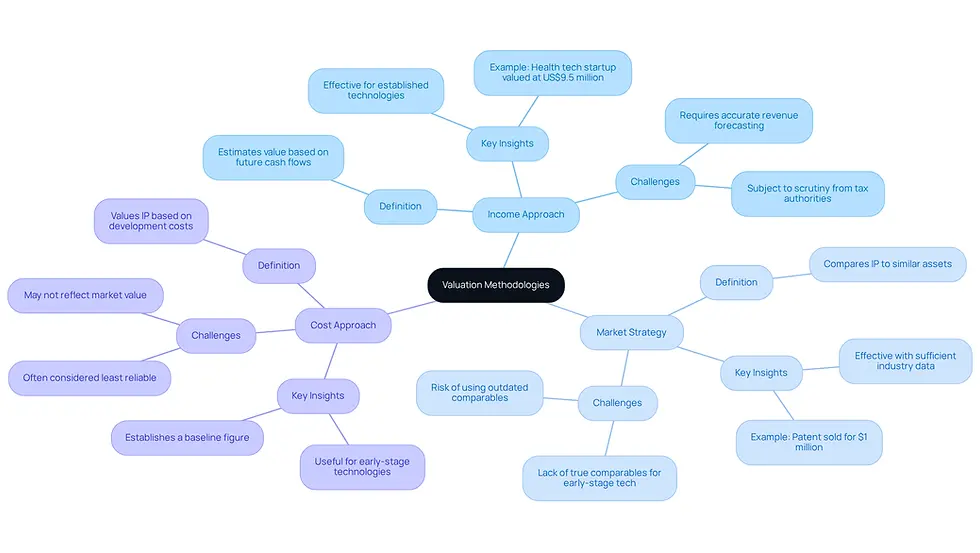
Tech CEOs must navigate various methodologies when performing expert IP valuation to ensure accurate assessments that reflect market realities. When assessing intellectual property, tech CEOs should consider three main methods: the income method, the market method, and the cost method. Each method offers unique insights and comes with its own set of challenges:
Income Approach: This method estimates the value of IP based on the present value of expected future cash flows generated by the asset. It is particularly effective for established technologies with predictable revenue streams. For example, a health tech startup effectively valued a small portfolio of patent applications at around US$9.5 million utilizing this method, despite having no revenue, by modeling potential licensing income. This method is gaining recognition for its effectiveness, particularly in biotechnology and pharmaceuticals, where licensing data is more accessible. Sherwood Australia applies this method alongside others to ensure a comprehensive valuation that reflects the asset's true potential.
Market Strategy: This strategy compares the IP to similar assets that have been sold or licensed in the industry. It is most effective when sufficient industry data is available. For example, if a company holds a patent similar to one recently sold for $1 million, it can use this information to gauge the value of its own patent. However, the market method often struggles with the lack of true comparables, particularly for early-stage technologies. It is crucial to confirm that the chosen comparables are pertinent and current, as using outdated or irrelevant comparables can significantly distort the valuation process, leading to misguided business decisions. Sherwood Australia emphasizes the importance of using a robust set of comparables to defend the valuation in negotiations.
Cost Approach: This method determines the worth of IP based on the costs incurred in developing or acquiring it. It is frequently employed for early-stage technologies where sales data may be limited. For instance, a startup might evaluate the total R&D expenses to establish a baseline figure for its innovations. While this method can offer a helpful baseline for assessments, it may not precisely represent economic worth or competitive conditions. Sherwood Australia merges this method with others to ensure that all aspects of the IP's value are considered.
By grasping these methodologies and their related challenges, tech CEOs can choose the most suitable approach for their specific IP assets, ensuring expert IP valuation that accurately reflects true market potential. Ultimately, a nuanced understanding of these methodologies can empower tech CEOs to make informed decisions that align with their strategic objectives.
Leverage IP Valuation for Strategic Business Decisions
Tech CEOs must recognize the strategic importance of IP valuation to drive their companies' growth and competitive positioning. They can leverage IP valuation in several impactful ways:
Mergers and Acquisitions: Accurate IP valuations are essential during M&A negotiations. An expert IP valuation of a well-valued IP portfolio can significantly enhance a company's appeal to potential buyers or investors. For instance, tech companies with strong patent collections often secure high market prices, making them more attractive in acquisition discussions. Sherwood Australia’s specialist assessments, supported by over 250 appraisals completed and AFSL licensing, ensure that companies present their IP in the best possible light.
Licensing Agreements: Understanding the significance of IP is crucial for companies aiming to negotiate favorable licensing agreements. Firms that accurately assess the worth of their technology can set higher royalty rates, maximizing revenue from licensing deals. This approach not only highlights the inherent value of the IP but also reflects its market demand, utilizing Sherwood Australia's customized assessment services.
Investment Decisions: Valuations play a critical role in guiding resource allocation. Companies can prioritize investments in high-value IP assets, ensuring that funds are directed toward innovations with the greatest potential return. Sherwood Australia’s insights into IP-rich assets help guide these critical investment choices, emphasizing the importance of employing the correct valuation methodologies for accurate assessments. By focusing on high-value IP, companies can significantly enhance their innovation outcomes and financial performance.
Risk Management: Understanding the value of IP aids in evaluating risks associated with infringement or litigation. Companies risk losing their competitive edge if they fail to protect their IP effectively. By taking this proactive approach, companies can better protect their IP and maintain a strong competitive edge, thanks to Sherwood Australia’s expertise.
By incorporating IP assessment into their strategic planning, tech CEOs can make informed choices that not only boost their company's worth but also enhance their competitive advantage in a rapidly evolving market. In a rapidly evolving market, leveraging IP valuation effectively can be the key differentiator for sustained success and innovation.

Overcome Challenges in IP Valuation: Best Practices for Tech CEOs
Tech CEOs frequently face significant hurdles in achieving expert IP valuation of their intellectual property assets, which can lead to critical financial implications. To effectively address these challenges, consider the following best practices:
Conduct Comprehensive IP Audits: Regular assessments of all IP assets are essential to ensure valuations align with current market conditions and technological advancements. This procedure should encompass the identification and documentation of all patents, trademarks, and copyrights, which can uncover concealed benefits and reduce risks related to IP management.
Employ Multiple Valuation Methods: Utilizing a combination of valuation methods is essential for achieving a more accurate assessment of IP assets. For instance, the expense, revenue, and industry methods can be employed together to cross-check findings, thus decreasing the chance of mistakes and offering a holistic perspective of the asset's worth. This multifaceted approach is particularly crucial in the technology sector, where the value of IP can vary greatly due to economic dynamics.
Stay Informed on Market Trends: Keeping abreast of industry developments and competitor activities is crucial for precise assessments, as market trends can significantly influence the demand for specific IP assets. Understanding how these trends affect pricing strategies can assist CEOs in making informed decisions.
Engage Experienced Valuers: Collaborating with professionals who specialize in IP assessment can significantly enhance accuracy. These experts bring insights and strategies that might not be readily available within the organization, ensuring that assessments are robust and justifiable.
Document Assumptions and Rationale: Clearly documenting the assumptions and reasoning behind assessments is essential for defending them during negotiations or audits. This transparency not only fosters trust with investors and stakeholders but also provides a strong foundation for future assessment efforts.
By embracing these best practices, tech CEOs can not only enhance the accuracy of their expert IP valuation but also strengthen their overall strategic positioning in a competitive market. Regular audits and a commitment to using multiple valuation methods can uncover the true value of IP assets, ultimately supporting better financial decision-making and enhancing competitive advantage.

Conclusion
For tech CEOs, accurately valuing intellectual property (IP) is crucial for maintaining a competitive edge in a rapidly evolving market. Accurate IP assessment not only attracts investment but also informs critical business decisions related to mergers, acquisitions, and licensing agreements. By recognizing the true value of their IP, tech leaders can effectively navigate the complexities of the market and leverage their innovations for sustained growth.
Throughout the article, key insights were presented, including the various methodologies for IP valuation - income, market, and cost approaches - each offering unique perspectives and challenges. The article emphasized the importance of employing multiple valuation methods, conducting regular audits, and staying informed on market trends to ensure accurate assessments. Additionally, engaging experienced valuers and documenting assumptions were highlighted as best practices that can significantly enhance the valuation process.
However, many tech CEOs struggle with the complexities of IP valuation, which can impede their strategic decisions. This oversight can lead to missed investment opportunities and weakened market positioning. Ultimately, the strategic valuation of IP assets can be the difference between leading the market and falling behind in an increasingly competitive landscape. Tech CEOs are encouraged to embrace these best practices, not only to improve their IP valuation but also to strengthen their overall market position. By prioritizing expert IP valuation, tech companies can unlock their full potential, ensuring they remain competitive and attractive to investors in an ever-evolving industry.
Frequently Asked Questions
Why is IP valuation important for tech companies?
IP valuation is crucial for tech companies as it drives competitive advantage and informs strategic decisions related to funding, mergers, acquisitions, and partnerships.
How does effective IP valuation attract investment?
Companies that can demonstrate the value of their IP are more likely to secure funding, as investors view strong IP as a signal of potential future revenue. Startups with robust IP portfolios are seen as more mature and capable of long-term success, making them significantly more successful in securing seed-stage funding.
What role does IP valuation play in strategic planning?
Understanding IP allows companies to allocate resources effectively, focusing investments on areas with the highest returns. A clear IP roadmap enhances a company's investability and showcases a proactive approach to protecting innovations.
How can a well-valued IP portfolio provide a competitive advantage?
A well-valued IP portfolio can differentiate a company in the marketplace, providing leverage in negotiations and partnerships. Properly assessed patents can lead to more advantageous licensing agreements, maximizing revenue streams and strengthening market position.
What services does Sherwood Australia offer regarding IP valuation?
Sherwood Australia provides expert IP valuation services, tailored corporate finance solutions to optimize deal outcomes, and support for strategic planning, including structuring and negotiating licensing arrangements that protect IP.


