

Master Independent Trademark Portfolio Valuation in 4 Simple Steps
- Sherwood Australia

- Jun 2
- 6 min read
Updated: 10 hours ago
Introduction
Understanding the value of a trademark is essential for businesses seeking to maximize their intellectual property assets. This discussion outlines key steps for effectively mastering independent trademark portfolio valuation, offering insights into methodologies that can enhance brand worth and strategic decision-making.
Assessing trademarks can be challenging due to the complexities of intangible assets and market dynamics. Without accurate valuation, businesses risk underutilizing their intellectual property, potentially leading to lost opportunities.
Understand the Basics of Trademark Valuation
Understanding the economic worth of a brand asset is essential for businesses seeking to maximize their intellectual property potential. Key concepts include:
Trademark: A recognizable sign, design, or expression that identifies the products or services of a specific source, playing a vital role in distinguishing a brand in a competitive market.
Goodwill: This intangible asset signifies the worth associated with a brand name, often connected to brand reputation and customer loyalty. Studies indicate that companies that register their brands tend to see greater income and productivity growth than those without intellectual property rights, highlighting the significance of goodwill in enhancing overall brand worth. As observed by Wynnes, 'Businesses registering brand marks experience stronger income and productivity growth compared to those without IP rights.'
Market Position: The brand's standing in the marketplace significantly influences its value. A strong market position can enhance an independent trademark portfolio valuation, as evidenced by the fact that high-value brands justify professional searches for trademark clearance.
Understanding these fundamental components is essential for companies. They provide the foundation for more advanced assessment methods and strategies. For example, professional assessors at Sherwood Australia, who have completed over 250 appraisals and hold an AFSL Licence No. 563351, frequently utilize techniques like the income approach, market approach, and cost approach to evaluate brand worth. This ensures that companies can make informed choices concerning their intellectual property. With a standard report processing time of 14 days, Sherwood Australia is well-prepared to help clients in managing the intricacies of brand assessment. As the landscape of brand assessment evolves, companies that prioritize goodwill will be better positioned to capitalize on their brand's true value.

Explore Valuation Methods for Trademarks
Valuing trademarks requires a nuanced understanding of various methodologies, each tailored to specific contexts:
Cost Approach: This method estimates value based on the costs incurred to create or replace the trademark. While less common, it is particularly useful in scenarios where historical costs can provide a baseline for valuation. Recent statistics indicate that this approach can establish a baseline worth of intellectual property at around $200,000 based on development costs, although it does not guarantee future earnings.
Market Approach: This method evaluates worth by comparing the brand to similar brands sold in the industry. It requires access to dependable trade data, which can be challenging due to the private nature of many IP transactions. Despite these challenges, market comparables play a crucial role in assessing a brand's value by analyzing recent sales data, particularly in active markets. In 2026, brand names that generate high royalties from licensing agreements are regarded as more valuable, reflecting their market viability.
Income Approach: The most commonly employed method, it determines the present value of anticipated future income produced by the brand. This often involves estimating future sales and applying an appropriate royalty rate. Experts emphasize that this approach is vital for intellectual property that directly generates or protects cash flow, providing valuable insights for investors and buyers.
Comprehending these techniques facilitates a more knowledgeable assessment process, allowing companies to strategically leverage their brand identities to enhance negotiation outcomes and drive growth.

Execute the Trademark Valuation Process
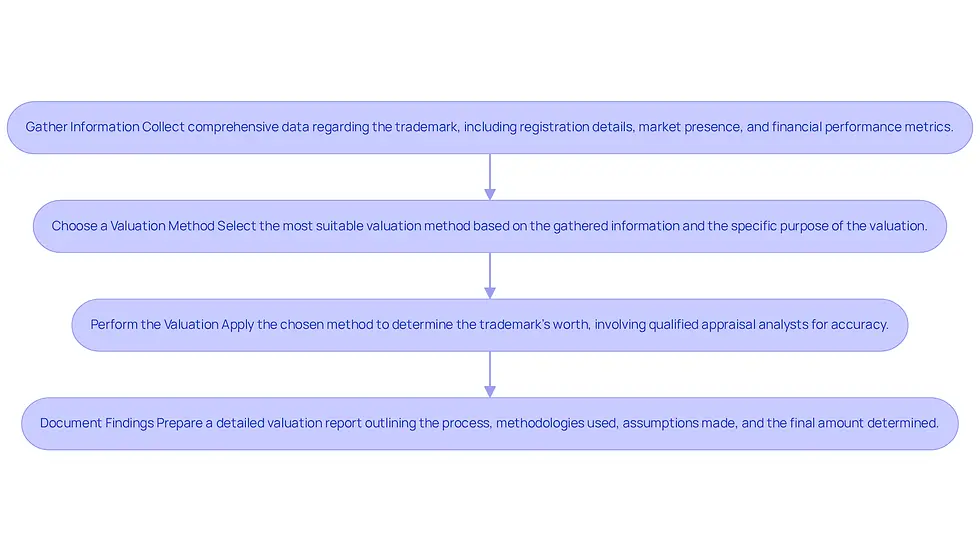
To execute a trademark valuation effectively, it is essential to follow a structured approach that ensures accuracy and defensibility:
Gather Information: Collect comprehensive data regarding the trademark, including registration details, market presence, and financial performance metrics. Organized record-keeping, including yearly documentation of sales and marketing expenses, aids in asset assessment and enhances your stance in possible disputes.
Choose a Valuation Method: Select the most suitable valuation method based on the gathered information and the specific purpose of the valuation. The three primary approaches are:
Cost Approach: Estimates the expenses required to develop a comparable brand from scratch, including registration and market penetration costs.
Market Approach: Values the brand based on the sale prices of similar assets, adjusted for differences among them, although this method is rarely applied due to the infrequency of brand sales.
Income Approach: The most frequently utilized method, especially the relief-from-royalty approach, forecasts future revenues and discounts them to present worth using a reasonable royalty rate.
Perform the Valuation: Apply the chosen method to determine the trademark's worth. For the income method, accurately estimate future revenues and apply an appropriate discount rate to determine the present worth. Involving qualified appraisal analysts is crucial for a defensible and well-documented assessment, particularly when navigating complexities like discount and royalty rates.
Document Findings: Documenting findings is essential: Prepare a detailed valuation report that outlines the entire process, including the methodologies used, assumptions made, and the final amount determined. This documentation is crucial for transparency, compliance with accounting standards like ASC 805, and serves as a reference for future evaluations or negotiations.
By following these steps, you can effectively evaluate the worth of your brand, ensuring that it reflects its true economic significance and supports strategic business decisions. This thorough approach not only enhances the credibility of the valuation but also positions the brand strategically in the marketplace.
Navigate Challenges in Trademark Valuation
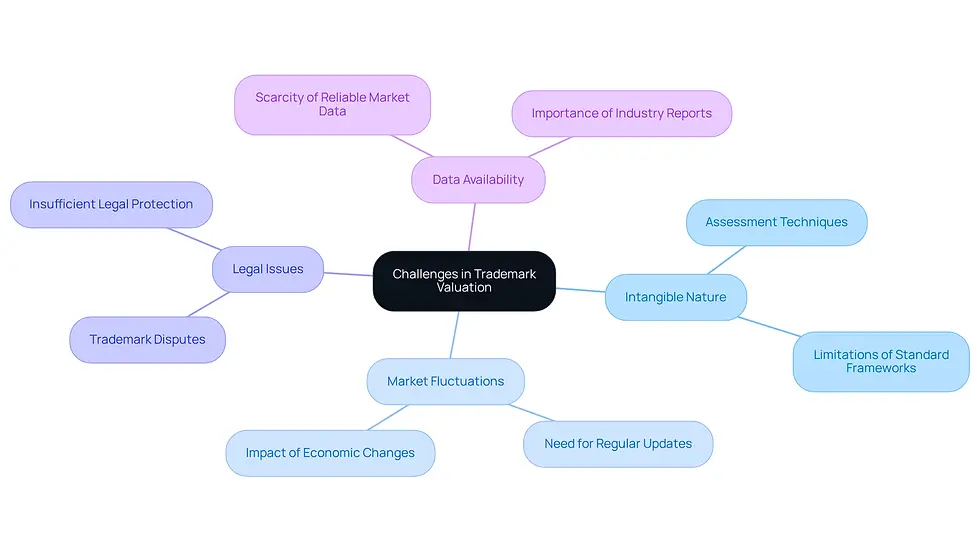
Valuing trademarks presents a series of complex challenges that require careful consideration and strategic approaches:
Intangible Nature: As intangible assets, trademarks pose significant difficulties in quantification. Using different assessment techniques helps in arriving at a more accurate estimate, ensuring a comprehensive evaluation. Standard assessment frameworks, such as EBITDA multiples, may not be suitable for IP-rich assets, as they can lead to misleading evaluations.
Market Fluctuations: To stay relevant, businesses must regularly update their valuations, adapting to the ever-changing economic landscape. Sherwood Australia highlights the significance of timely evaluations to enhance the benefits gained from intellectual property ownership.
Legal Issues: Trademark disputes or insufficient legal protection can adversely impact worth. Addressing all legal aspects, including potential conflicts and ensuring robust protection, is crucial before proceeding with a valuation. Strong legal protection plays a crucial role in determining the value of a trademark portfolio.
Data Availability: Reliable market data can often be scarce. Utilizing industry reports and databases is essential for collecting the necessary information to support precise assessments. With over 250 appraisals provided across different sectors, Sherwood Australia guarantees that clients obtain well-informed assessments supported by AFSL licensing for legally compliant evaluations.
By addressing these challenges head-on, businesses can make informed decisions that enhance their competitive edge in the marketplace.
Conclusion
For businesses aiming to leverage their intellectual property effectively, understanding the value of a trademark portfolio is not just beneficial; it is essential. Mastering the valuation process enables companies to make informed decisions that enhance their market position and maximize potential revenue streams. This guide outlines the fundamental steps necessary for executing an independent trademark valuation, ensuring that businesses can appreciate the true worth of their brand assets.
Understanding key concepts such as trademarks, goodwill, and market position is crucial for effective trademark valuation. The guide details three primary approaches - cost, market, and income - each suited to different contexts and needs. By following a structured process that includes gathering information, selecting the appropriate method, performing the valuation, and documenting findings, businesses can navigate the complexities of trademark valuation with greater confidence. Many businesses struggle to accurately assess the value of their trademarks due to their intangible nature and fluctuating market conditions. Addressing challenges such as these, along with legal issues and data availability, is essential for achieving accurate assessments.
Ultimately, the significance of trademark valuation extends beyond mere numbers; it embodies the strategic essence of a brand. Companies are encouraged to prioritize regular evaluations and adopt a proactive stance in managing their intellectual property. Failure to conduct regular trademark valuations can lead to missed opportunities for growth and potential revenue loss. By taking these steps, companies not only safeguard their assets but also open doors to growth and innovation in a competitive marketplace. By embracing these principles, companies can not only safeguard their assets but also position themselves for sustained growth and innovation in an ever-evolving marketplace.
Frequently Asked Questions
What is a trademark?
A trademark is a recognizable sign, design, or expression that identifies the products or services of a specific source, helping to distinguish a brand in a competitive market.
What is goodwill in the context of trademark valuation?
Goodwill is an intangible asset that signifies the worth associated with a brand name, often linked to brand reputation and customer loyalty. It plays a crucial role in enhancing overall brand worth.
How does registering a brand affect a company's income and productivity?
Studies indicate that companies that register their brands tend to experience greater income and productivity growth compared to those without intellectual property rights, highlighting the importance of goodwill.
What role does market position play in trademark valuation?
A brand's standing in the marketplace significantly influences its value. A strong market position can enhance the valuation of an independent trademark portfolio.
What methods do professional assessors use to evaluate trademark worth?
Professional assessors often use techniques such as the income approach, market approach, and cost approach to evaluate brand worth.
How long does it take to process a standard trademark valuation report?
The standard report processing time for trademark valuation is 14 days.
Who can assist with trademark valuation and brand assessment?
Professional assessors, such as those at Sherwood Australia, who have extensive experience in appraisals, can assist companies in managing the complexities of brand assessment.


