

Master Patent Valuation for Legal Proceedings in Australia
- ANTHONY VAGO
- 6 days ago
- 7 min read

Updated: 3 hours ago
Introduction
Navigating the complexities of patent valuation presents significant challenges for professionals in Australia. This guide provides a comprehensive overview of the essential methods for assessing intellectual property, demonstrating that precise valuations can directly impact legal outcomes and inform strategic business decisions.
However, navigating the myriad of approaches and understanding the legal complexities can be daunting for professionals. It is crucial to ensure that valuations are robust enough to withstand scrutiny in legal settings.
Understand Patent Valuation Fundamentals
A comprehensive understanding of intellectual property assessment is essential for effective valuation. Valuing intellectual property requires assessing the economic worth of trademarks, which is influenced by regulatory status, market potential, and the technology they protect. Key concepts include:
Patent Rights: Grasp the exclusive rights conferred by a patent, enabling the holder to prevent unauthorized use, production, or sale of the patented invention.
Economic Value: This encompasses the potential revenue an intellectual property right can generate through avenues like licensing, sales, or enforcement in legal disputes. For example, a footwear company utilized its exclusive rights for physiological-support shoes to obtain financing amid threats from counterfeits, illustrating the concrete economic benefits derived from robust intellectual property protections. Furthermore, a health tech startup assessed its current intellectual property worth at approximately US$9.5 million utilizing the income-based approach, highlighting the wider economic influence of innovations. Sherwood Australia emphasizes that the value of an intellectual property portfolio depends significantly on the strength of its protections and the context of its evaluation, ensuring that no value is overlooked during discussions.
Legal Considerations: Familiarize yourself with the legal landscape surrounding patents, emphasizing the necessity of maintaining patent validity and understanding the ramifications of ongoing litigation. As noted by industry leaders, the assessment of intellectual property is now a strategic imperative, underscoring its integral role in corporate strategy. Sherwood Australia’s AFSL-licensed team is prepared to provide defensible assessments, ensuring that every assumption is stated, explained, and can withstand scrutiny.
By mastering these fundamentals, you will be well-prepared to navigate the complexities of valuation in legal contexts, ensuring that you can effectively assess and leverage the economic impact of intellectual property within the technology sector. This knowledge empowers professionals to strategically navigate the valuation landscape, maximizing the potential of intellectual property.

Identify Valuation Methods and Criteria
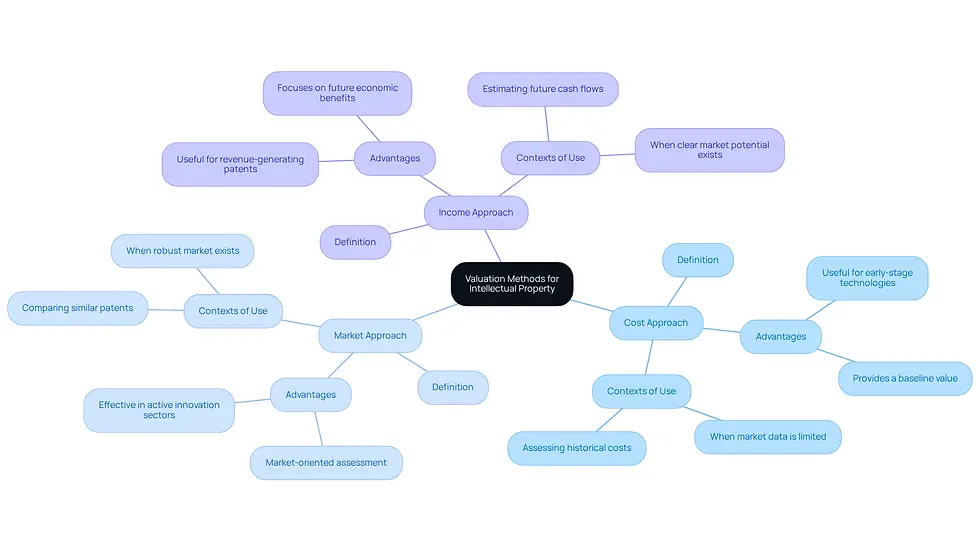
Assessing intellectual property is a nuanced process that requires careful consideration of various methodologies tailored to specific contexts and objectives. The most prevalent methods include:
Cost Approach: This method assesses a patent's value based on the total costs incurred during its development, including research and development expenses. It is especially advantageous for inventions that have not yet started producing income, offering a foundation for their potential value.
Market Approach: This method evaluates an intellectual property right by comparing it to similar rights that have been sold or licensed. It provides a market-oriented assessment, making it particularly efficient in fields where active innovation trading takes place, such as technology and pharmaceuticals.
Income Approach: This method forecasts the future economic advantages anticipated from the intellectual property, discounting these benefits to present value. It is most appropriate for inventions that are already generating revenue or have clear market potential, allowing for a more accurate assessment based on expected cash flows.
Choosing the right assessment method can be complex, given the diverse contexts and objectives involved. Ultimately, a well-informed approach to intellectual property assessment can significantly impact legal outcomes and strategic decisions.
Execute the Patent Valuation Process
To execute a patent valuation effectively, it is essential to follow a structured approach that ensures accuracy and credibility:
Gather Documentation: Collect all relevant documents, including the invention itself, licensing agreements, and financial statements that illustrate its economic impact. This documentation forms the foundation for a robust valuation.
Assess Legal Strength: Evaluate the intellectual property's legal status, assessing any ongoing litigation or challenges that may complicate its value. This evaluation should encompass an analysis of enforceability and potential infringement issues, as these factors significantly influence the marketability and overall value of the intellectual property.
Choose a Valuation Method: Based on the gathered information and the specific context of the valuation, select the most suitable valuation method - be it cost, market, or income approach. Each method has its strengths and is applicable under different circumstances. Sherwood Australia highlights the significance of customized methodologies for IP-rich assets, ensuring that the selected strategy corresponds with the distinctive features of the intellectual property being evaluated.
Perform the Valuation: Apply the chosen method to calculate the patent's value. It is crucial to record all assumptions and calculations carefully, as this clarity reinforces the credibility and defensibility in legal contexts. Sherwood Australia, with over 250 assessments delivered and AFSL-licensed, provides comprehensive, professionally prepared reports that include detailed methodologies, assumptions, and conclusions, ensuring they are compelling for investor presentations and due diligence.
Review and Revise: After finishing the assessment, carry out a detailed examination of the findings and make adjustments as needed. Interacting with colleagues or advisors for feedback can improve the precision and strength of the assessment, ensuring it meets the necessary standards for judicial processes. Sherwood Australia's expert IP appraisal services are designed to provide precise assessments, maximizing value from intellectual property ownership.
Following these organized steps allows for a thorough and justifiable patent valuation for legal proceedings in Australia, making it ready for any legal examination. Ultimately, a meticulous valuation process not only safeguards intellectual property but also enhances its potential market value.

Assess Strategic Implications for Litigation
After completing the intellectual property appraisal, it is essential to understand its strategic implications for patent valuation for legal proceedings in Australia. Key factors to consider include:
Negotiation Leverage: A robust patent valuation significantly enhances your negotiating position, whether in settlements or licensing agreements. By understanding the patent's economic value, you can advocate more effectively for your interests, potentially leading to more favorable terms. Sherwood Australia, with over 250 assessments delivered, offers the expertise needed to enhance your position.
Litigation Strategy: The assessment informs your litigation approach, guiding decisions on whether to pursue enforcement actions or settle disputes. Understanding the value of intellectual property through patent valuation for legal proceedings in Australia assists in assessing the costs and benefits related to litigation, facilitating more strategic decisions. Our AFSL-licensed services ensure legally compliant patent valuation for legal proceedings in Australia that supports your strategy.
Risk Assessment: It's crucial to evaluate risks linked to the intellectual property, including challenges to its validity or enforceability. Understanding these risks shapes your legal strategy and informs your approach to patent valuation for legal proceedings in Australia, helping to mitigate potential losses and prepare you for various outcomes. This is evident as the NPE portion of UPC infringement claimants rose from 18.3% in 2024 to 21.8% in 2025, highlighting the increasing pressure on companies to manage their intellectual property portfolios effectively.
Future Planning: Utilize the assessment to guide upcoming business choices, such as investing in additional development of the patented technology or exploring licensing opportunities. This foresight can enhance your competitive edge and align with long-term business goals. With a typical report turnaround time of 14 days, you can make timely decisions that impact your business.
By thoroughly assessing these strategic implications, you position yourself to navigate litigation challenges more effectively, especially in terms of patent valuation for legal proceedings in Australia and securing advantageous outcomes.

Conclusion
Navigating the complexities of legal proceedings in Australia requires a deep understanding of patent valuation. The ability to accurately assess the economic worth of intellectual property empowers professionals to leverage their assets strategically, ensuring that patents are not only protected but also positioned effectively within the market. This guide outlines key principles and methodologies essential for conducting thorough patent valuations, including specific valuation methods and their applications, underscoring their significance in legal contexts.
Key insights discussed include:
The foundational understanding of patent rights
The various valuation methods such as cost, market, and income approaches
The structured process required for executing a robust valuation
Additionally, the strategic implications of these assessments for negotiation, litigation strategy, risk management, and future planning have been emphasized, highlighting how a well-executed valuation can influence legal outcomes and corporate strategies.
In conclusion, the importance of mastering patent valuation cannot be overstated. As businesses increasingly recognize the value of their intellectual property, professionals must equip themselves with the knowledge and skills necessary to conduct effective valuations. This knowledge not only helps protect their innovations but also gives them a competitive edge in the marketplace. Embracing these best practices in patent valuation will lead to informed decision-making and strategic advantages in legal proceedings, ultimately shaping the future landscape of intellectual property management in Australia.
Frequently Asked Questions
What is the importance of understanding patent valuation fundamentals?
A comprehensive understanding of intellectual property assessment is essential for effective valuation, as it allows for accurate assessment of the economic worth of trademarks influenced by regulatory status, market potential, and the technology they protect.
What are patent rights?
Patent rights are exclusive rights conferred by a patent that enable the holder to prevent unauthorized use, production, or sale of the patented invention.
How is the economic value of intellectual property determined?
Economic value encompasses the potential revenue that an intellectual property right can generate through avenues such as licensing, sales, or enforcement in legal disputes.
Can you provide an example of economic benefits derived from intellectual property protections?
A footwear company used its exclusive rights for physiological-support shoes to obtain financing amid threats from counterfeits, demonstrating the concrete economic benefits of strong intellectual property protections.
What is an example of a specific valuation of intellectual property?
A health tech startup assessed its intellectual property worth at approximately US$9.5 million using the income-based approach, illustrating the economic influence of innovations.
What factors influence the value of an intellectual property portfolio?
The value of an intellectual property portfolio significantly depends on the strength of its protections and the context of its evaluation, ensuring that no value is overlooked during discussions.
What legal considerations should be taken into account when valuing patents?
It is important to familiarize oneself with the legal landscape surrounding patents, maintain patent validity, and understand the implications of ongoing litigation.
Why is the assessment of intellectual property considered a strategic imperative?
The assessment of intellectual property is now viewed as a strategic imperative due to its integral role in corporate strategy, emphasizing the need for accurate and defensible evaluations.
How can professionals prepare for the complexities of patent valuation?
By mastering the fundamentals of patent valuation, professionals can effectively assess and leverage the economic impact of intellectual property within the technology sector, maximizing its potential.


