

Maximize Business Value: Trademark Valuation for Boards
- ANTHONY VAGO
- 2 days ago
- 7 min read

Updated: 3 hours ago
Introduction
Trademarks are pivotal to brand identity, significantly influencing consumer perceptions and business value. As companies navigate increasingly competitive landscapes, navigating trademark valuation presents challenges that can hinder effective asset management. Businesses must adopt effective strategies to accurately assess the worth of their trademarks and leverage this information for strategic growth. This article explores effective trademark valuation methods and underscores the importance of professional insights in improving board decision-making, thereby enhancing market potential.
Understand the Role of Trademarks in Business Value
Trademarks are vital assets that not only distinguish a company's offerings but also embody its brand identity and values. A strong brand significantly influences customer perceptions and loyalty, enhances market positioning, and allows companies to command premium prices. For instance, companies like Apple and Nike have built substantial brand value through their logos, which directly correlates with their market worth.
It is essential for companies to register their logos with IP Australia to qualify for protection, safeguarding their brand identity against unauthorized use. Registration of a mark typically lasts for 10 years and can be renewed indefinitely, ensuring continuous protection as long as the mark is utilized. Without proper registration, companies risk losing their brand identity to unauthorized use.
Grasping the significance of brand identifiers aids entrepreneurs in understanding trademark valuation for boards, valuing their potential influence on overall company worth and strategic expansion, especially regarding uniqueness, which is vital for distinguishing a label in the market. Failure to protect brand identifiers can lead to diminished market value and customer trust. Legal actions can be initiated against unauthorized use, emphasizing the need for proactive brand management.
Recognizing the strategic importance of brand identifiers allows business owners to build customer trust and leverage their brand for a competitive advantage. At Sherwood Australia, we specialize in providing trademark valuation for boards, ensuring precise evaluations that maximize the value of your intellectual property assets. With over 250 assessments delivered and our AFSL Licence No. 563351 guaranteeing compliance with ASIC requirements, you can have confidence in our valuation processes.
We are dedicated to confidentiality and a professional transaction process, assisting you in unlocking the full commercial potential of your intellectual property through strategic licensing solutions. By prioritizing brand protection, businesses can secure their market position and foster long-term customer loyalty.

Explore Effective Trademark Valuation Methods
Valuing trademarks can be complex, with various methods presenting unique challenges and insights. Several established methods for valuing trademarks exist, each offering a distinct perspective:
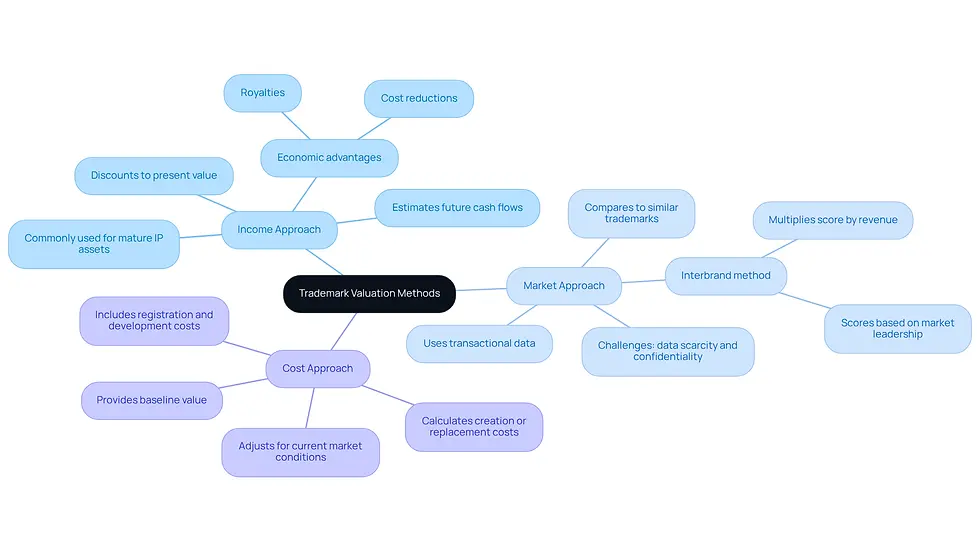
Income Approach: This method estimates the current worth of future cash flows generated by the trademark, making it especially advantageous for established brands with predictable revenue streams. It entails examining possible economic advantages, like royalties or cost reductions, and discounting them to present worth. This method is frequently utilized for established intellectual property assets, enabling businesses to measure the economic benefit derived from brand equity.
Market Approach: The Market Approach evaluates an asset's worth by comparing it to similar items that have been sold or licensed, providing a benchmark grounded in market data. Despite challenges such as data scarcity and confidentiality, it can provide valuable insights when analysts carefully assess brand characteristics and adjust for differences. For example, the Interbrand method, a widely acknowledged market strategy, assigns a score to the brand based on elements like market leadership and consumer loyalty, which is then multiplied by the brand's revenue to assess its worth.
Cost Approach: This method calculates the expenses incurred to create or replace the brand, offering a baseline value. It takes into account costs associated with registration, brand development, and marketing, providing a fundamental understanding of the brand's value based on historical expenses, adjusted for current market conditions.
Understanding these techniques enables owners to select the most suitable method for their unique situations, ensuring a more precise assessment of their intellectual properties. Ultimately, selecting the right valuation method can significantly influence strategic outcomes in competitive markets.
Leverage Trademark Valuation for Strategic Business Decisions
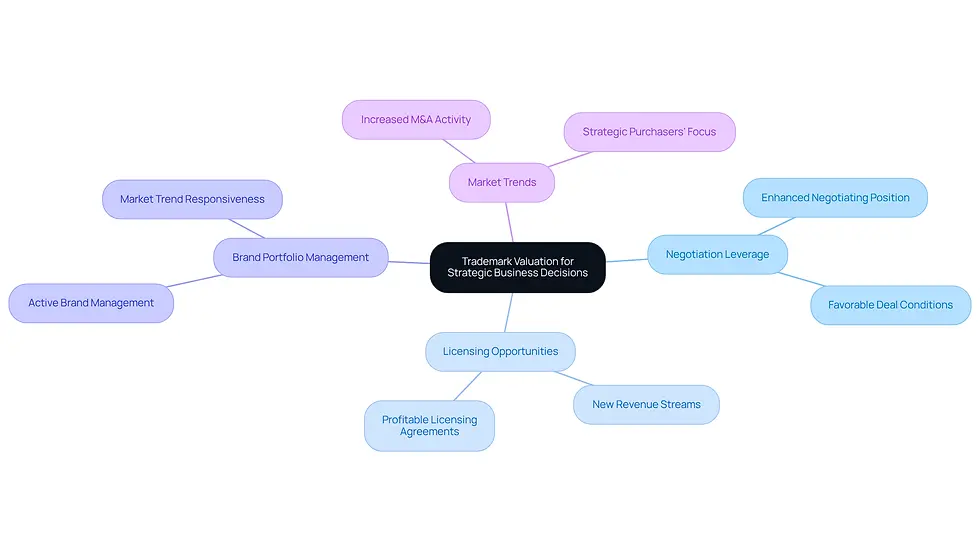
Understanding brand identities is crucial for informed strategic business decisions, particularly in the context of mergers and acquisitions. A thorough assessment of intellectual property can significantly enhance negotiating leverage for trademark valuation for boards, resulting in more favorable conditions. For instance, companies that document their intellectual property assets are often in a stronger negotiating position, allowing them to secure better deals. With over 250 assessments completed, Sherwood Australia equips clients with the insights needed for effective negotiation strategies.
Furthermore, trademark valuation for boards plays a vital role in identifying profitable licensing opportunities. By accurately conducting trademark valuation for boards of their intellectual assets, companies can leverage their brands more effectively, tapping into new revenue streams. Organizations that actively manage their brand portfolios are better positioned to respond to market trends and consumer preferences, driving growth and profitability. We typically deliver reports within a 14-day timeframe, enabling businesses to respond swiftly to market dynamics.
For instance, companies that have utilized brand assessments to explore licensing agreements have successfully expanded their market presence and enhanced brand awareness. This proactive approach not only maximizes the value of their intellectual property but also positions them favorably in competitive landscapes.
As the M&A landscape evolves, the importance of trademark valuation for boards becomes increasingly pronounced. With heightened M&A activity anticipated in 2026, driven by strategic purchasers seeking to refresh their resources, enterprises that prioritize brand assessment will likely find themselves in a favorable position. By incorporating brand assessment into their strategic planning, companies can navigate complex transactions with increased confidence and clarity. Sherwood Australia, with its AFSL Licence No. 563351, is committed to maintaining confidentiality and provides expert IP assessment services tailored to the unique needs of businesses, ensuring compliance with ASIC standards and enhancing the benefits derived from intellectual property ownership.
Engage Professional Analysts for Accurate Valuation Insights
Navigating the complexities of trademark valuation for boards can be daunting for many business owners, making expert assistance essential. Engaging Sherwood Australia's professional analysts is highly recommended for conducting trademark valuation for boards to achieve precise brand valuations. These experts have the skills and experience to conduct thorough assessments for trademark valuation for boards using advanced methodologies like the Income Approach and Market Approach. They can identify key elements affecting brand worth, such as brand recognition, market share, and legal protections.
According to Donghoo Sohn, Esq., understanding how to effectively evaluate intellectual property value is crucial for owners, investors, and legal experts involved in transactions. By partnering with assessment experts at Sherwood Australia, owners can ensure that their trademark valuation for boards is not only precise but also strategically aligned with their objectives. This partnership enhances decision-making and business outcomes, as new trademark activity is associated with higher returns on equity and assets, especially in the first year post-registration.
Furthermore, Sherwood Australia's tailored valuation services are designed to navigate growth, exits, and the complexities of AI asset valuation. This ensures that clients maximize the value of their intellectual property through expert licensing solutions. Importantly, all assessments are conducted in compliance with ASIC regulatory requirements, and Sherwood Australia holds AFSL Licence No. 563351, reinforcing our commitment to legal compliance and professional integrity. With Sherwood Australia's expertise, businesses can confidently navigate the intricacies of brand valuation and unlock their full potential.

Conclusion
Trademarks represent more than just symbols; they are vital to a company's identity and market value. Proper valuation and protection can greatly improve a business's market position and strengthen customer loyalty. Recognizing the strategic value of trademarks allows businesses to leverage these assets to maximize their overall worth and ensure sustainable growth.
The article highlights various valuation methods, including the Income, Market, and Cost approaches, each providing unique insights into a trademark's worth. It emphasizes the necessity of engaging professional analysts to conduct thorough assessments, ensuring compliance with ASIC regulations, and ultimately achieving precise valuations that align with strategic business objectives. Companies that prioritize trademark valuation are better equipped to navigate complex transactions, enhance negotiating power, and identify profitable licensing opportunities.
In a competitive landscape, many businesses overlook the true value of their trademarks, risking their market position and customer loyalty. Failure to manage trademark assets effectively can hinder a company's growth and profitability. As the importance of trademark valuation for boards continues to grow, businesses must take action to assess and protect their intellectual property. Working with experts like Sherwood Australia helps companies realize the full potential of their trademarks, ensuring they remain valuable assets that drive growth and profitability in the Australian mid-market.
Frequently Asked Questions
What is the role of trademarks in business value?
Trademarks are vital assets that distinguish a company's offerings and embody its brand identity and values. A strong brand influences customer perceptions, loyalty, market positioning, and allows companies to command premium prices.
Why is it important for companies to register their trademarks?
Registering trademarks with IP Australia protects a company's brand identity against unauthorized use. Without proper registration, companies risk losing their brand identity and face potential legal challenges.
How long does trademark registration last?
Trademark registration typically lasts for 10 years and can be renewed indefinitely, as long as the mark is utilized.
What are the consequences of not protecting brand identifiers?
Failure to protect brand identifiers can lead to diminished market value, loss of customer trust, and potential unauthorized use of the brand.
How can trademarks influence a company's overall worth?
Understanding trademark valuation helps entrepreneurs recognize their potential influence on overall company worth and strategic expansion, particularly through uniqueness in the market.
What services does Sherwood Australia provide regarding trademarks?
Sherwood Australia specializes in providing trademark valuation for boards, ensuring precise evaluations that maximize the value of intellectual property assets.
How does Sherwood Australia ensure compliance in their valuation processes?
With over 250 assessments delivered and an AFSL Licence No. 563351, Sherwood Australia guarantees compliance with ASIC requirements in their trademark valuation processes.
What is the importance of brand protection for businesses?
Prioritizing brand protection helps businesses secure their market position, foster long-term customer loyalty, and unlock the full commercial potential of their intellectual property through strategic licensing solutions.


