

Maximize Growth: IP Valuation for Strategic Partnerships
- ANTHONY VAGO
- May 13
- 6 min read

Updated: May 15
Introduction
Accurate valuation of intellectual property (IP) is crucial for businesses aiming to forge strategic partnerships. By effectively assessing the worth of intangible assets, organizations can enhance their negotiation power, attract vital investments, and bolster their credibility. Despite the availability of various methods for IP valuation, companies must adopt a strategic approach to leverage their assets effectively for growth and advantageous partnerships. This article examines the significance of IP valuation, analyzes key methodologies, and outlines best practices that enable businesses to engage in strategic collaborations effectively.
Understand the Importance of IP Valuation in Strategic Partnerships
Accurate intellectual property (IP) valuation for strategic partnership is crucial for organizations aiming to forge these alliances. It serves as a benchmark for assessing the worth of intangible assets, significantly influencing negotiations and partnership dynamics.
Accurate IP valuation for strategic partnership enables companies to effectively present a strong case to potential partners, highlighting the economic benefits and competitive advantages of their IP portfolio. This aids in attracting investment and enhances the business's credibility with stakeholders.
For example, a technology company with a strong patent portfolio can utilize its IP assessment to negotiate improved terms in joint ventures or licensing agreements, ultimately enhancing growth opportunities.
Engaging independent assessment services from Sherwood Australia provides essential insights and credibility, ensuring that your IP is accurately represented and strategically positioned in negotiations.
Testimonials from clients emphasize the impact of Sherwood's services: "The assessment prepared by Anthony and the Sherwood team provided us with real leverage in our Series A discussions. It was robust, defensible, and tailored to the reality of early-stage MedTech - exactly what we needed."
Additionally, statistics reveal that patent-owning startups are 6.4 times more likely to attract investment, underscoring the critical role of IP valuation in enhancing partnership prospects.
Ultimately, the process of IP valuation for strategic partnership can be the deciding factor in securing vital partnerships and investments.

Explore Key Methods for Valuing Intellectual Property
Effective ip valuation for strategic partnership is critical for companies seeking to leverage their intangible assets. Three primary approaches are commonly used, each tailored to different asset types and business contexts:
Income Approach: This method estimates the value of IP by calculating the present value of anticipated future cash flows produced by the resource. It is particularly effective for revenue-generating IP, such as patents that yield royalties. For instance, a health tech startup successfully valued its patent applications at approximately US$9.5 million using this approach, despite having no revenue at the time. This valuation helped them attract investors by highlighting potential future earnings.
Market Approach: This approach involves comparing the IP to similar assets that have been sold or licensed in the market. It provides a benchmark for valuation based on actual transaction data, making it a reliable method when sufficient market data is available. For instance, the market approach is especially beneficial in sectors with many similar transactions, enabling companies to assess their IP's worth against comparable deals.
Cost Approach: This method determines the worth of IP based on the expenses incurred in developing the resource, including research and development costs. It is often employed for unique or proprietary technologies where market data is scarce. While straightforward, this approach serves as a baseline measure and does not account for the potential future income that the IP may generate.
Understanding these valuation methods enables companies to select the approach for ip valuation for strategic partnership that aligns with their strategic objectives and the nature of their intellectual property. As non-physical resources increasingly influence company worth, especially in tech industries, selecting the right ip valuation for strategic partnership not only enhances growth but also positions companies for success in an increasingly competitive landscape.

Leverage IP Valuation to Strengthen Strategic Partnerships
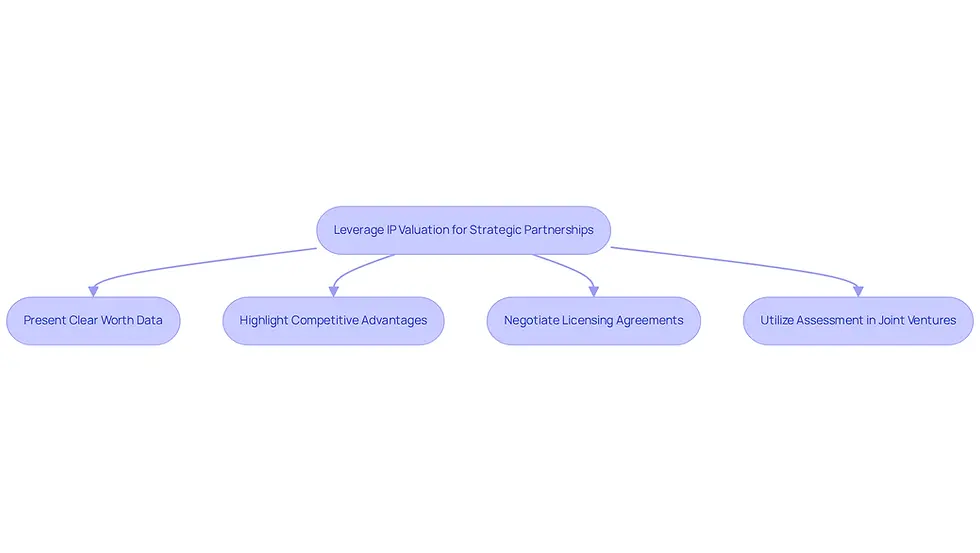
To maximize the potential of intellectual property in strategic partnerships, businesses must adopt effective valuation strategies:
Present Clear Worth Data: When entering negotiations, provide potential partners with comprehensive reports that detail the value of your IP assets. This transparency fosters trust and facilitates informed discussions, ultimately leading to more favorable outcomes.
Highlight Competitive Advantages: Use the assessment to demonstrate how your IP can offer a competitive edge in the market. For instance, if your patents cover unique technologies, emphasize how these innovations can enhance the partner's product offerings, thereby increasing their market appeal. Incorporating relevant data can further strengthen your position.
Negotiate Licensing Agreements: IP valuation for strategic partnership serves as a critical foundation for negotiating favorable licensing agreements. By showcasing the economic potential of your IP, you can secure terms that accurately reflect its true value, which is essential for maximizing returns.
Utilize Assessment in Joint Ventures: In joint ventures, a well-documented IP assessment clarifies ownership stakes and revenue-sharing models, significantly reducing the risk of disputes and ensuring smoother collaboration. This clarity is essential for aligning interests and building lasting partnerships.
Neglecting these strategies could lead to lost opportunities and hindered innovation.
Implement Best Practices for Effective IP Valuation
To achieve effective IP valuation, businesses must adopt a structured approach that includes best practices:
Conduct Regular IP Audits: Frequent evaluations of your IP portfolio are crucial for recognizing and recording all resources, including patents, trademarks, copyrights, and trade secrets. These audits help maintain accurate records and support assessment efforts, which in turn enhances compliance and reduces risk. They also play a critical role in identifying potential infringements and ensuring adherence to IP laws, thereby safeguarding valuable assets.
Engage Qualified Assessment Experts: Collaborating with professionals who specialize in IP appraisal, such as those at Sherwood Australia, is essential. Their expertise offers insights into the complexities of assessment techniques and ensures compliance with evolving standards. Involving skilled professionals can result in more dependable assessments, which are increasingly examined by authorities such as the ATO and ASIC, making it vital for meeting regulatory requirements.
Stay Informed on Market Trends: Keeping abreast of industry trends and market conditions is vital for understanding factors that may affect the value of your IP. Understanding the competitive landscape guides your assessment strategy and improves negotiation results, especially in a fast-changing market setting.
Utilize Multiple Appraisal Techniques: Employing a combination of appraisal methods allows for a more precise assessment of your IP's worth. This strategy reduces the drawbacks of any individual technique and offers a thorough perspective of your resources, which is especially crucial considering the subjectivity and intricacy involved in intellectual property assessment. As best practices continue to evolve, staying informed about new methodologies is crucial.
When organizations adopt these best practices, they can significantly improve the reliability of their IP valuation for strategic partnership, leading to more informed decisions and successful collaborations. Ultimately, these practices not only safeguard assets but also empower organizations to make strategic decisions that drive growth.

Conclusion
Accurate intellectual property (IP) valuation is essential for organizations aiming to forge successful strategic partnerships. By understanding the true worth of intangible assets, organizations can effectively negotiate and present their value proposition to potential partners, thereby enhancing their competitiveness and credibility in the market.
This article has examined various methods for IP valuation, including the income, market, and cost approaches. Each method serves distinct purposes, allowing businesses to tailor their valuation strategy to align with their unique assets and objectives. Additionally, best practices such as conducting regular IP audits, engaging qualified experts, and staying informed on market trends are essential components for achieving reliable valuations.
Many organizations find it challenging to accurately assess the value of their intangible assets, which can hinder their negotiation power. This lack of clarity can lead to missed opportunities for strategic partnerships that could drive growth and innovation.
In the end, using effective IP valuation can really boost partnerships and spark growth and innovation. Organizations are encouraged to adopt these strategies and best practices to maximize their IP's potential, ensuring they remain competitive and well-positioned in an ever-evolving business landscape. Recognizing the importance of IP valuation can unlock new avenues for collaboration and establish a strong foundation for sustained success.
Frequently Asked Questions
Why is IP valuation important for strategic partnerships?
Accurate IP valuation is crucial for organizations as it serves as a benchmark for assessing the worth of intangible assets, significantly influencing negotiations and partnership dynamics.
How does accurate IP valuation benefit companies in negotiations?
It enables companies to present a strong case to potential partners by highlighting the economic benefits and competitive advantages of their IP portfolio, which aids in attracting investment and enhances credibility with stakeholders.
Can you provide an example of how a company might use IP valuation?
A technology company with a strong patent portfolio can utilize its IP assessment to negotiate improved terms in joint ventures or licensing agreements, ultimately enhancing growth opportunities.
What role do independent assessment services play in IP valuation?
Engaging independent assessment services, such as those from Sherwood Australia, provides essential insights and credibility, ensuring that IP is accurately represented and strategically positioned in negotiations.
What do clients say about Sherwood Australia's IP assessment services?
Clients have testified that the assessments provided by Sherwood give them real leverage in discussions, being robust, defensible, and tailored to their specific industry needs.
What statistics highlight the importance of IP valuation for startups?
Statistics reveal that patent-owning startups are 6.4 times more likely to attract investment, underscoring the critical role of IP valuation in enhancing partnership prospects.
How can IP valuation influence the success of securing partnerships and investments?
The process of IP valuation can be the deciding factor in securing vital partnerships and investments, making it essential for organizations looking to grow and thrive.


