

Master Independent Trademark Valuation in 5 Simple Steps
- Sherwood Australia

- Jun 2
- 9 min read
Updated: 1 day ago
Introduction
The value of a trademark extends beyond mere numbers; it is integral to a company's strategic framework and market positioning. In today's competitive landscape, businesses must navigate the intricacies of trademark valuation, which can hinder their strategic initiatives. Mastering this process can lead to enhanced market positioning and increased investor confidence. This article delves into five straightforward steps that empower businesses to unlock the full potential of their trademarks, ensuring they are well-prepared for future growth and opportunities.
Understand the Importance of Independent Trademark Valuation
Independent trademark valuation is essential for maximizing business potential and securing investor confidence:
Financial Insight: It provides an accurate comprehension of your brand's economic significance, which is crucial for enticing investors or obtaining loans. Research indicates that patents and brand names can boost startup valuations by approximately 20% in specific industries, according to industry specialists.
Strategic Decision-Making: Understanding the significance of your brand allows for informed choices about licensing, sales, or mergers. A well-known trademark can command premium pricing and facilitate licensing opportunities, making independent trademark valuation essential for enhancing overall business strategy. Incorrect pricing methods can lead to significant financial losses during negotiations, highlighting the necessity for independent trademark valuation to achieve accurate evaluations.
Legal Protection: A thorough assessment serves as critical evidence in legal disputes, safeguarding your intellectual property rights. Robust legal safeguards not only reduce risks but also increase the appeal of brand names to investors, underscoring the importance of independent trademark valuation in the comprehensive assessment process. This increased appeal can lead to higher investment opportunities.
Market Positioning: Gaining insights into your trademark's value through independent trademark valuation can significantly improve your brand's market positioning and competitive edge. Trademarks with strong reputations are typically given higher worth due to perceived lower risk, making them more attractive to potential investors. This is especially pertinent for IP-rich assets, where independent trademark valuation plays a crucial role in assessing the strength of legal protection and commercial optionality.
Future Planning: It supports strategic planning for future growth, acquisitions, or divestitures, ensuring your business is well-prepared for any eventuality. The financial worth of brands becomes increasingly clear as they develop into recognized labels with strong consumer loyalty, which can be essential for lasting success.
Recognizing these factors helps business owners understand the importance of an independent trademark valuation, which is crucial for achieving improved strategic outcomes and increased investor interest. At Sherwood Australia, we have provided over 250 assessments and are AFSL-licensed, ensuring legally compliant evaluations with a typical report turnaround of 14 days.

Prepare for the Trademark Valuation Process
To ensure a robust trademark valuation process, it is imperative to follow a structured approach that encompasses key preparatory steps:
Conduct an IP Audit: Begin by reviewing all intellectual property assets, including trademarks, to ensure all assets are accurately documented and registered. This audit is essential for understanding your IP's value and is a vital part of effective strategic management, particularly through independent trademark valuation.
Gather Documentation: Collect all pertinent documents, such as registration certificates, usage records, and licensing agreements. Comprehensive documentation is essential; without it, you risk undermining the defensibility of your IP in disputes. Thorough documentation can significantly affect the results of an independent trademark valuation process.
Compile Financial Statements: Assemble financial data that demonstrates the brand's contribution to revenue, including sales figures and profit margins. This information is critical, as businesses with strong IP protection often experience higher income and productivity growth compared to those without.
Research Industry Standards: Explore market trends and similar brand assessments within your sector to create a benchmark. Understanding the competitive landscape will help you position your trademark effectively. Working with specialists like Sherwood Australia provides tailored solutions that ensure your IP assessment is accurate and market-relevant.
Engage Experts: Consider hiring a specialist or consultant focusing on intellectual property to assist you throughout the process. Their expertise can offer valuable insights and ensure adherence to current assessment methodologies. Engaging experts ensures that your independent trademark valuation aligns with current methodologies, thereby enhancing the credibility of your assessment.
By finishing these preparatory steps, you will create a strong basis for an accurate and effective brand assessment, ultimately improving your business's strategic positioning. Recognizing the significance of IP in diverse sectors, particularly as we approach World IP Day 2026, can enhance your strategic positioning in the market.

Select the Appropriate Valuation Method
Selecting the right approach for independent trademark valuation is critical for accurately assessing a brand's value, as each method offers distinct insights and implications. The most common methods include:
Cost Approach: This method determines the worth based on the expenses incurred to create or replace the brand. It is especially beneficial for newly created brands, as it indicates the investment made in developing the brand. It's important to keep in mind that this approach should factor in historical costs and might need adjustments for inflation or shifts in marketing strategies.
Market Approach: This method contrasts the brand with comparable brands that have been sold or licensed, offering a market-driven viewpoint on worth. However, the unique nature of brand marks often complicates direct comparisons, leading to potential inaccuracies in valuation. Analysts typically assess various characteristics, such as popularity and profitability, to make informed judgments about comparability.
Income Approach: This method looks at the future earnings the brand is expected to generate, bringing them back to their present value. It is particularly effective for established brands with a proven revenue history, as it emphasizes the strategic significance of the brand in driving sales and maintaining market share.
Relief-from-Royalty Approach: This approach calculates the worth based on the royalties that would be preserved by possessing the brand instead of licensing it. It combines elements of both the income and market approaches, providing a comprehensive view of the brand's value.
Multi-Period Excess Earnings Approach (MPEEA): This advanced technique evaluates the earnings linked to the brand over several periods, incorporating elements of the income approach to deliver a detailed assessment.
Choosing the suitable approach for an independent trademark valuation depends on the trademark's traits, market circumstances, and the aim of the assessment. Considering that IP is frequently the most valuable resource a business possesses, seeking advice from a specialist like Sherwood Australia, which has provided over 250 assessments, can assist in guaranteeing the correct decision is made. Their multi-strategy approach, which encompasses market, income, cost, and relief-from-royalty techniques, guarantees that every assessment is precise and justifiable, optimizing the benefits obtained from intellectual property ownership. Thus, leveraging expert guidance is essential to navigate the complexities of brand valuation and ensure that no potential value is overlooked.

Execute the Trademark Valuation and Prepare the Report
To achieve accurate independent trademark valuation, a systematic approach is essential. Follow these essential steps to effectively execute trademark valuation and prepare a comprehensive report:
Perform the Assessment: Utilize the chosen appraisal method to determine the trademark's worth accurately. Ensure that all calculations are precise and thoroughly documented, as this forms the foundation of your assessment.
Analyze Results: Critically review the assessment outcomes, paying close attention to any anomalies or unexpected findings that may warrant further investigation. This step is crucial for ensuring the reliability of your assessment.
Draft the Valuation Report: Create a comprehensive report that includes:
An executive summary outlining the valuation process and key findings.
Detailed descriptions of the assessment methods utilized.
Supporting documentation and data analysis to substantiate your conclusions.
Clear conclusions and actionable suggestions based on the assessment results.
Review and Revise: Involve colleagues or appraisal specialists to examine the report, ensuring accuracy and clarity before finalizing it. Working with colleagues can really boost the credibility of your findings.
Present Findings: Share the assessment report with stakeholders, clearly communicating the implications of the findings. Effective presentation is essential for ensuring that stakeholders comprehend the value and importance of the brand.
By following these steps, you will ensure that your brand assessment is conducted thoroughly and recorded in a professional manner. Ultimately, an independent trademark valuation process safeguards the integrity of brand assessments and informs critical business strategies.

Navigate Challenges and Best Practices in Trademark Valuation
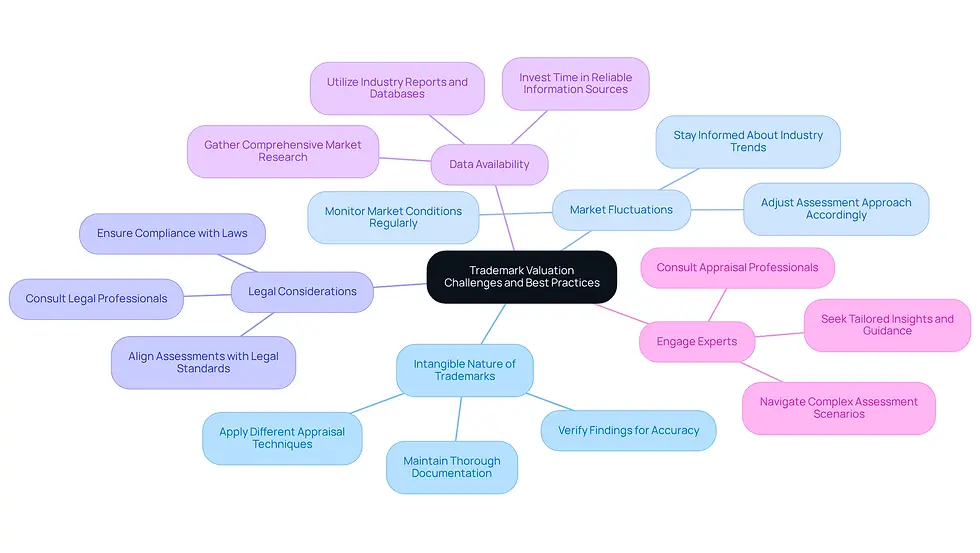
Effectively navigating trademark assessment requires addressing several key challenges that can impact valuation accuracy. Here are key issues and best practices to consider:
Intangible Nature of Trademarks: The inherent difficulty in quantifying the worth of intangible assets can lead to discrepancies. To address this, maintain thorough documentation and apply different appraisal techniques to verify your findings, leading to a more accurate assessment. Sherwood Australia highlights that using the incorrect assessment methodology can result in missed opportunities, particularly for assets with significant intellectual property value.
Market Fluctuations: Changes in market conditions can significantly affect brand worth. Staying informed about industry trends and adjusting your assessment approach accordingly is crucial. Firms that keep a close eye on market trends can adjust their strategies more effectively to preserve trademark value.
Legal Considerations: Compliance with relevant laws and regulations regarding intellectual property is essential. Interacting with legal professionals can assist in navigating potential pitfalls and ensure that your assessment aligns with current legal standards. Sherwood Australia, with its AFSL-licensed assessments, emphasizes the necessity for compliance with legal standards in the appraisal process.
Data Availability: Limited access to reliable information can create significant barriers to accurate trademark valuation. Investing time in gathering comprehensive market research and financial data is necessary to support your assessment. Utilizing industry reports and databases can enhance the robustness of your analysis.
Engage Experts: When uncertainties arise, consulting with appraisal professionals can provide tailored insights and guidance. Their expertise can help navigate complex assessment scenarios, ensuring that your approach is both informed and effective. Sherwood Australia has provided over 250 assessments across every sector, showcasing their capability in this area.
By addressing these challenges, businesses can enhance their trademark valuation processes and ultimately protect their brand value. This proactive approach not only safeguards your brand but also positions it for sustained success in a competitive market.
Conclusion
Independent trademark valuation is essential for businesses aiming to maximize their potential and attract investor interest. Understanding the significance of trademarks enables companies to make informed decisions that enhance strategic positioning and protect intellectual property rights. This valuation gives companies a clear picture of their brand's worth and helps them plan strategically for future growth and market positioning.
The article outlines five essential steps for mastering independent trademark valuation:
Understanding its importance
Preparing adequately
Selecting the appropriate valuation method
Executing the valuation process
Navigating challenges with best practices
Each of these steps emphasizes the necessity of thorough preparation and expert guidance, ensuring that businesses can accurately assess their trademarks' value and leverage this information effectively.
Ultimately, the process of independent trademark valuation is not merely a financial exercise; it is a strategic imperative that can significantly influence a company's trajectory. Prioritizing independent trademark valuation can be the key differentiator that propels a company toward sustained growth and competitive advantage. Embracing these practices not only protects intellectual property but also lays the groundwork for future opportunities and growth.
Frequently Asked Questions
Why is independent trademark valuation important for businesses?
Independent trademark valuation is crucial for maximizing business potential, securing investor confidence, and making informed strategic decisions. It provides financial insight, aids in legal protection, improves market positioning, and supports future planning.
How does independent trademark valuation provide financial insight?
It offers an accurate understanding of a brand's economic significance, which is vital for attracting investors or obtaining loans. Research shows that patents and brand names can enhance startup valuations by about 20% in certain industries.
What role does trademark valuation play in strategic decision-making?
Understanding a brand's significance allows for informed choices regarding licensing, sales, or mergers. A well-known trademark can command premium pricing and facilitate licensing opportunities, making accurate valuation essential to avoid financial losses during negotiations.
How does independent trademark valuation contribute to legal protection?
A thorough assessment serves as critical evidence in legal disputes, protecting intellectual property rights. Strong legal safeguards reduce risks and enhance the appeal of brand names to investors, leading to increased investment opportunities.
In what ways does trademark valuation affect market positioning?
Insights gained from independent trademark valuation can enhance a brand's market positioning and competitive edge. Trademarks with strong reputations are valued higher due to perceived lower risk, making them more attractive to potential investors.
How does independent trademark valuation support future planning?
It aids in strategic planning for growth, acquisitions, or divestitures, ensuring businesses are prepared for various eventualities. As brands develop strong consumer loyalty, their financial worth becomes clearer, which is essential for long-term success.
What preparatory steps should be taken for a robust trademark valuation process?
Key steps include conducting an IP audit, gathering documentation, compiling financial statements, researching industry standards, and engaging experts to ensure an accurate and effective valuation process.
What should be included in the documentation for trademark valuation?
Relevant documents include registration certificates, usage records, and licensing agreements. Comprehensive documentation is essential for maintaining the defensibility of intellectual property in disputes.
Why is it important to compile financial statements for trademark valuation?
Financial data demonstrating the brand's contribution to revenue, such as sales figures and profit margins, is critical. Businesses with strong IP protection often experience higher income and productivity growth.
How can engaging experts benefit the trademark valuation process?
Hiring a specialist or consultant in intellectual property can provide valuable insights and ensure adherence to current assessment methodologies, thereby enhancing the credibility of the valuation.


